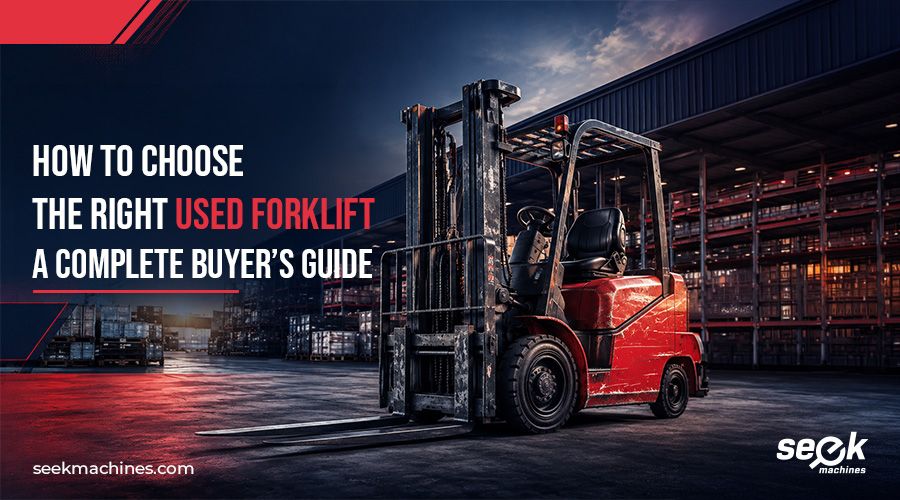
How to Choose the Right Used Forklift: A Complete Buyer's Guide
Choosing the correct second-hand machinery will considerably reduce your overall expenses on operating your company. The process of selecting a suitable machine presupposes thorough analysis of your needs regarding the load capacity, wear level of machinery, power source and maintenance history. This buying guide will provide you with the required information on the topic.
Used Forklift Selection Definition
Used fork truck selection presupposes evaluation of your material handling requirements with regard to the condition of machines presented in the market at the moment. It includes matching your daily loading needs with the machine specifications in order to increase efficiency of its operation and workers' safety. Performing this process will allow you to avoid additional machinery repairs and costly downtime of your company.
1. Material Handling Evaluation
You should assess the maximum load weight and height of facility shelving to choose the most appropriate machine and avoid additional equipment strain and unsafe material handling operations during the work process.
2. Machine Condition Assessment
Inspection of key parts will allow you to reveal the possible damage of machinery and prevent further mechanical failure of your capital assets.
3. Value Assessment
When comparing the cost of initial purchase with the cost of fuel, batteries, and repairs for years to come, it is easy to see the total value. An inexpensive lift truck that requires many repairs will cost much more in the long run than an efficient machine that was well maintained.
Applications, Advantages and Description of Used Lift Trucks
1. Considerable Money Saved on Initial Purchase
Acquiring a second-hand fork lift truck means saving fifty percent off the cost of purchasing an entirely new one from the manufacturer. This considerable saving allows your business to immediately put more money into expanding the inventory, upgrading facilities, or hiring employees. You obtain a working and reliable lift truck while maintaining strict control over the whole equipment budget of your business throughout the year.
2. Fast Availability of the Equipment
New machines have a long delivery time imposed by manufacturers which may seriously disrupt your warehouse activity. Second-hand forklift are readily available in local dealers' yards and can be immediately delivered to your job site.
3. Confirmed Hours Worked and Life-Cycle Analysis
The reading of the hour meter either digital or mechanical reveals the number of actual hours worked by the forklift during its working lifespan. Machinery with lower total hours worked experiences less structural wear and has a greater lifespan ahead for the needs of your facility. Confirmation that hours worked correspond with physical wear will ensure that you get value for your company money.
4. Maintenance Documentation
By requesting service documentation for the machinery, it is possible to determine whether the owner took good care of the machinery by ensuring oil changes, filter changes, and regular inspection of components. Well-maintained machines suffer from mechanical defects that cause unpredictable performance when the machinery is put to use. These complete records help your team be assured that the machinery will perform reliably without the risk of unexpected expensive repair costs.
5. Choice of Suitable Power Source
Choosing from the options available in terms of power source depends on your facilities' needs. The need for electricity, indoor air quality, and other considerations influence the power source chosen. For instance, electric machinery is ideal in closed food warehouses due to clean and quiet operation. However, for rough construction sites, diesel engines provide rugged power. The choice helps reduce operational cost and keep your workers comfortable and safe.
6. Machinery Fork and Lift Mast Inspection Procedure
Inspection of fork blades for any cracking, structural bend, and excessive heel wear helps to prevent any danger of loads falling off when handling them. The lift mast test involves checking to confirm that upright channels slide smoothly and that the lift chains show no sign of rust or missing pins. This inspection procedure helps save your company money through avoiding expensive replacement costs and safety of your staff members.
7. Leakages of Hydraulic System Fluid and Checking the Machine Pressure
Examination of hydraulic cylinders, valves, and flexible pressure hoses confirms that the machine retains constant lifting capacity without losing critical hydraulic fluids. Oil puddles under a parked truck suggest faulty rubber seals, which might cause unexpected loss of hydraulic pressure when lifting loads. Tight hose connection verification guarantees smooth attachment operation and keeps your warehouse floor completely dry and non-slippery for your employees.
8. Used Forklift Tire Types and Wear Check Standards
Determining tire tread depth and rubber integrity allows concluding whether a purchased truck can operate on smooth concrete indoor floors or rough outdoor gravel ones. Tires that have been worn out are harmful because they worsen vehicle stability, increase driver exhaustion, and require you to spend money on new tires shortly after purchase. Selecting appropriate tires for your surfaces guarantees comfortable operating conditions and optimal machine stability while being fully loaded.
9. Ergonomic and Machine Safety Features
Verification of seat adjustments, safety belt, warning horn, backup lights, and brakes guarantees that your operator will work in a safe cab. Modern seat control mechanisms will help to alleviate your operator's fatigue and will significantly reduce warehouse collision risks and spillage of your materials. Attention to safety aspects guarantees your compliance with all workplace safety rules while providing your workforce with protection from any injuries.
10. Warranty and Repair Support Packages from Dealers
When purchasing the equipment through an honest dealership in machinery, you can enjoy warranty coverage in the short term and have access to certified and skilled repair technicians. These warranty and repair support services will protect your monetary investment in case of early breakdowns of the equipment and provide you with genuine spare parts whenever necessary. By working with a credible equipment supplier, your business will enjoy peace of mind and smooth operation at all times.
Conclusion
Choosing the best used forklift involves compromising between cost-saving on one side and operational needs and condition of the forklift itself on the other side. Through comprehensive inspection of the machine and its mechanical parts and choosing a reliable dealership, you will guarantee the safety of your investment. This is where SEEK Machines would help you. SEEK Machines platform lets you identify the right used machine as per your requirements without having the hassle of a mediator involved.